
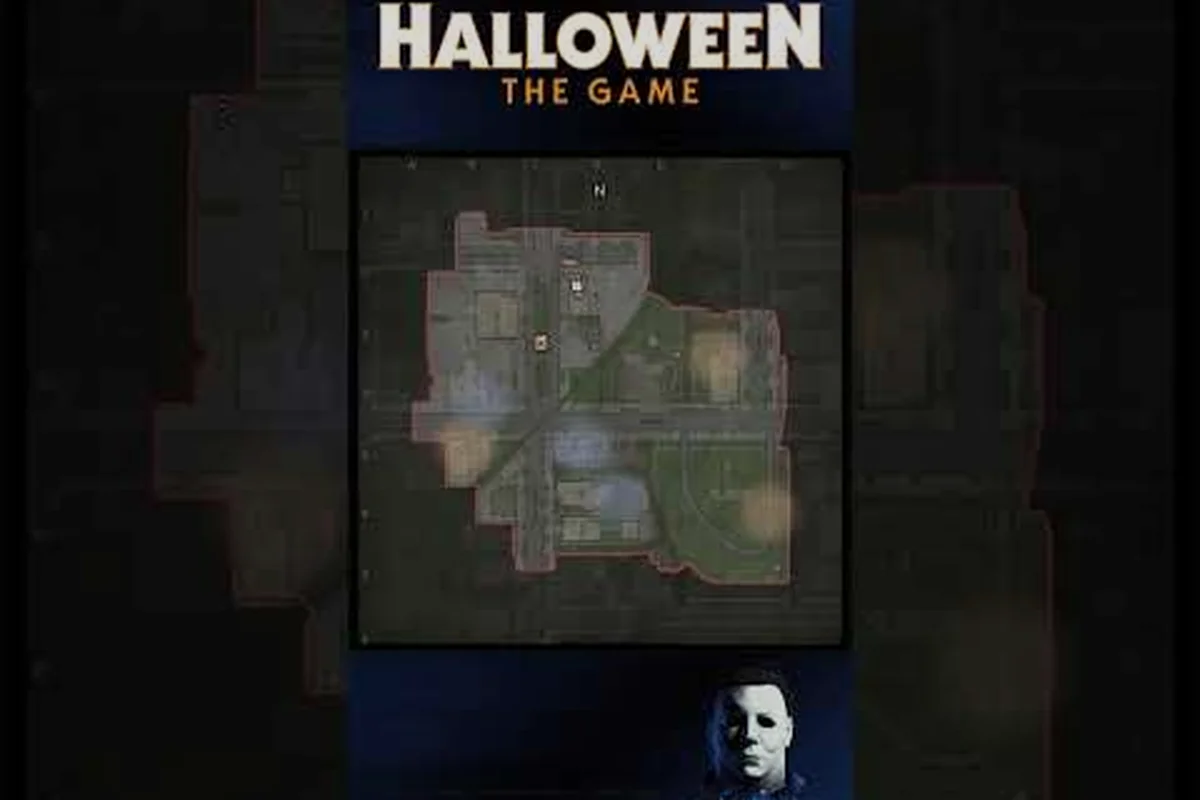
Understanding Halloween: The Game map objectives turns every chase from a panicked sprint into a calculated escape plan. The 1978 Haddonfield neighborhood is dense with interactive zones, each one demanding a different set of priorities depending on whether you are stalking as Michael Myers or surviving as a Hero. Zone completion is not about checking off arbitrary markers—it is about controlling the flow of the match through house perimeters, vehicle spots, and phone locations that shift in value as the night progresses. Michael Myers or surviving as a Hero. Zone completion is not about checking off arbitrary markers—it is about controlling the flow of the match through house perimeters, vehicle spots, and phone locations that shift in value as the night progresses, and learning how those zones interact with the Halloween The Game Map Landmarks reveals exactly where each perimeter breach or vehicle holdout gives you the strongest positional advantage.
Reading Haddonfield Tactical Blocks
Every Halloween: The Game map objectives cluster around a small set of residential blocks that players learn to read like a tactical grid. The official IllFonic In-Game Map video shows how the neighborhood layout separates into distinct playable zones, each with its own rhythm of entry points and exit lanes. According to community data collected through early access testing, Heroes who internalize zone boundaries before their first chase survive roughly twice as long as those who wander without a mental map.
The zone grid works because Haddonfield is not a symmetrical arena—it is a lived-in suburban space where sightlines break at fences, parked cars, and hedgerows. This means Halloween: The Game map objectives reward players who think in terms of perimeter control rather than raw distance. A house that looks far away on the map might be reachable in seconds if you cut through a backyard, while a street-level path to the same structure might force you across three exposed sightlines.
| Zone Type | Primary Objective | Hero Priority | Myers Priority |
|---|---|---|---|
| Residential Core | Secure house interiors | Lock doors, find weapons | Cut off exits, break windows |
| Perimeter Streets | Reach vehicle spawns | Repair or fuel vehicles | Ambush near parked cars |
| Backyard Lanes | Navigate fences and hedges | Use low visibility for stealth | Patrol fence gaps |
| Utility Zones | Locate phone locations | Call for police support | Sabotage phone lines |
Learning to read the grid means understanding how these zone types connect. A Hero who exits a Residential Core through a back door enters a Backyard Lane that feeds directly into a Perimeter Street, and that transition is exactly where Myers players set their traps. Because the map does not change between matches, Halloween: The Game map objectives become a knowledge game—whoever knows the transitions better controls the engagement.
Houses as Vertical Battlegrounds
Halloween: The Game house layouts are not decorative backdrops; they are the vertical battlegrounds where most Hero rescues and escapes begin. Each house on the map features a repeatable internal structure that players can learn, although specific furniture placement and prop details vary between buildings. Community reports emphasize that interior objectives almost always involve one of three tasks: securing a door, finding a weapon cache, or reaching a second-floor window for a ladder escape.
The second floor matters because it creates a temporary safe zone that Myers must commit to breaching. Heroes who understand Halloween: The Game house layouts can hold a staircase for valuable seconds while teammates complete objectives elsewhere, but that hold only works if someone has already mapped the alternate exit—usually a back door or a climbable trellis. Players who camp upstairs without an exit plan tend to get cornered when Myers breaks through the front door and forces a predictable retreat.
Interior Anchor Points
Every house contains what players call anchor points, which are fixed interactive elements that shape how objectives play out. The front door, back door, staircase, and at least one second-floor window form the basic skeleton of any interior encounter. Learning these anchor points lets you plan routes through Halloween: The Game house layouts before you ever enter a building, which is why experienced players often call out "front door locked, back door open" within seconds of arriving.
-
Front door – fastest entry but loudest; Myers usually breaks it first
-
Back door – quieter entry, often overlooked during chases
-
Staircase – single choke point, strongest Hero defensive position
-
Second-floor window – escape route if a ladder or trellis is available
-
Closet or basement – hiding spot, but a dead end if Myers searches
Because these anchor points are consistent across Halloween: The Game house layouts, players can practice interior movement even before learning every individual house. The skill transfers directly: if you know how to clear a staircase and check the back door in one house, you can apply that same sequence to the next.
Map Perimeters and Vehicle Spots
The outer edge of Haddonfield is where Halloween: The Game map perimeters become a survival factor. Heroes who hug the perimeter often avoid Myers for long stretches because the outer streets offer longer sightlines and fewer interior traps, but those same perimeters are where vehicle spawns concentrate. The risk is baked into the reward: reaching a vehicle spot might start an escape sequence, but it also announces your position to any Myers player who understands Halloween: The Game map perimeters.
Vehicles are not instant escapes. Halloween: The Game map vehicles require interaction time—fueling, repairing, or hotwiring—and that time is exactly when Myers closes distance. According to the official Steam page, the neighborhood's dynamic features shape every match, meaning a vehicle spot that was safe in one game might be compromised in the next based on police patrol routes and Myers pressure.
Vehicle Objective Sequencing
The best vehicle plays follow a strict sequence that minimizes exposed time. First, identify a vehicle spot from a distance and watch it for a few seconds before committing. Second, approach from a direction that keeps a house or fence between you and the most likely Myers approach lane. Third, begin the interaction only after confirming no stalking shadow is moving toward the spot. Players who skip the observation phase often start a repair only to get grabbed mid-animation.
| Vehicle Type | Interaction Time | Escape Reliability | Best Hero Pairing |
|---|---|---|---|
| Sedan | Short | Low (loud start) | Lone Hero, fast exit |
| Truck | Medium | Medium (durable) | Two Heroes, one on lookout |
| Police Cruiser | Long | High (summons backup) | Full team coordination |
| Lawn Tractor | Very Short | Low (slow speed) | Last resort, low visibility |
Because Halloween: The Game map vehicles differ so much in interaction time, choosing the right one matters as much as reaching it. A Lawn Tractor might be quick to start but nearly useless for actually escaping a determined Myers, while a Police Cruiser takes so long that it requires a coordinated team distraction to pull off.
Phone Locations and Map Spawns
Halloween: The Game map phone locations are the objective that most directly shifts match momentum. A working phone lets Heroes call police support, which forces Myers to respond to a new threat vector and often pulls him away from a downed survivor or a nearly repaired vehicle. Community testing indicates that phone locations are distributed across the map but never spawn in the same building twice within a single match, which keeps Heroes moving instead of camping a known spot.
Map spawns follow a similar logic. Halloween: The Game map spawns for weapons, tools, and key items are not fully random—they pull from a set of fixed potential spawn points scattered through the neighborhood. Learning these points means you can predict where a weapon might appear without memorizing a full loot table, because the spawn system tends to distribute essentials across different zones rather than clustering them in one house.
Spawn Rotation Patterns
The spawn system rotates between a handful of predetermined layouts, which players have mapped through repeated runs. While exact rotation rules remain unconfirmed as of August 2026, community reports suggest that Halloween: The Game map spawns follow a zone-weighting pattern: if one zone spawns a weapon, the adjacent zone is more likely to spawn a tool or key item. This prevents any single route from guaranteeing a fully loaded Hero in the first two minutes.
-
Weapon spawns – often in kitchens, garages, or shed exteriors
-
Tool spawns – repair kits near vehicle spots or utility rooms
-
Key item spawns – hidden in bedrooms, basements, or under furniture
-
Medical spawns – bathrooms, first-floor closets, or nurse's offices
-
Phone spawns – wall-mounted units in kitchens or hallways
Because these spawn categories overlap with Halloween: The Game map objectives, a Hero who checks a kitchen for a weapon might also find a phone in the same room. The efficient route loops through rooms that serve multiple potential spawn functions, maximizing the chance of finding something useful on every pass.
Zone Completion Strategies for Heroes
Winning as a Hero means completing zone objectives faster than Myers can disrupt them, and that requires a shared mental model of who is doing what. The strongest teams assign roles based on spawn knowledge: one player moves toward the nearest vehicle spot, another checks phone locations, and a third holds a central house to create a fallback position. Because Halloween: The Game map objectives are distributed, a team that clusters together usually fails to complete enough of them before Myers picks them apart.
Solo Heroes need a different approach. Without teammates to split objectives, you must prioritize by match state: early game favors map spawns and house layout scouting, mid game pushes vehicle objectives, and late game often comes down to a desperate phone call or a last-second perimeter escape. Players who try to do everything at once end up doing nothing well, which is why the best solo runs are deliberately sequential.
Priority Matrix by Match Phase
| Match Phase | Hero Priority | Myers Counterplay | Win Condition |
|---|---|---|---|
| Early (0-3 min) | Scout spawns, lock doors | Patrol perimeter, break windows | Establish map control |
| Mid (3-7 min) | Repair vehicles, call phones | Camp vehicle spots, cut phone lines | Create escape pressure |
| Late (7+ min) | Final escape or last stand | Close remaining exits, stalk downed Heroes | Execute the endgame |
| Overtime | Protect the last Hero | Sweep hiding spots | Survive or eliminate |
This matrix matters because Halloween: The Game map objectives change value over time. A weapon spawn that was critical in the first minute becomes nearly irrelevant at minute seven, while a vehicle spot that was too risky early can become the only viable exit late. Players who adjust their objective priority as the match progresses consistently outperform those who chase the same goal from start to finish.
Frequently Asked Questions
How many zones are on the Halloween: The Game map?
The Haddonfield map splits into four main zone types: Residential Core, Perimeter Streets, Backyard Lanes, and Utility Zones. Each zone type appears multiple times across the neighborhood, creating a layered grid of overlapping objectives rather than a simple list of distinct named areas.
Do Halloween: The Game house layouts change between matches?
The base structure stays consistent—front door, back door, staircase, and second-floor window anchor points appear in every house. However, prop placement and furniture details vary, which means hiding spots and sightlines shift slightly even though the overall flow remains familiar.
Where do vehicles spawn on the map?
Vehicles concentrate along the map perimeters, with Sedans, Trucks, Police Cruisers, and Lawn Tractors appearing at fixed potential spots. The exact vehicle at each location rotates between matches, so you need to scout perimeter streets each game rather than assuming the same vehicle will be there.
How do phone locations work?
Phone locations are fixed potential spawn points that rotate each match, and no single building spawns a phone twice in one game. Heroes use phones to call police support, which forces Myers to divert attention and can create openings for vehicle repairs or rescues.
What is the fastest way to learn the map?
Play matches with a focus on one zone type at a time—first learn all house interiors, then all perimeter vehicle spots, then all phone locations. Watching the official In-Game Map video from IllFonic gives you a baseline overview before you drill into specifics.
Mastering Halloween: The Game map objectives is a compounding skill: every house layout you memorize, every vehicle spot you scout, and every phone location you confirm adds another layer to your match awareness. The players who dominate Haddonfield are not necessarily the best at raw mechanics—they are the ones who know exactly where they are, where they are going, and what objective matters most in that moment.