
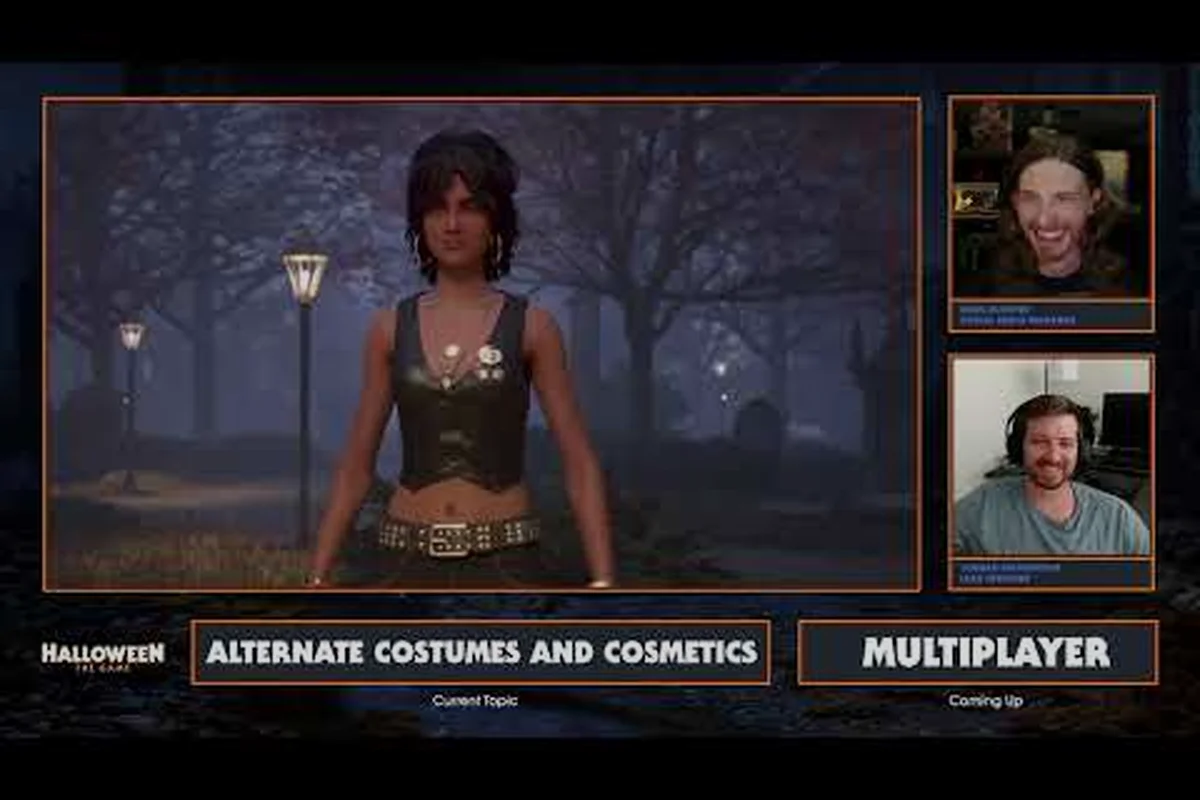
Haddonfield transforms into a living nightmare on Halloween night, 1978. This asymmetrical horror sandbox drops one player into the role of Michael Myers, The Shape, while up to four others become Heroes of Haddonfield fighting desperately to survive until dawn. Built by IllFonic using Unreal Engine 5, the game captures the relentless tension of John Carpenter's 1978 masterpiece through fluid movement mechanics, environmental interactivity, and a psychological cat-and-mouse dynamic that rewards both careful planning and split-second decisions. Understanding the core mechanics before entering Haddonfield gives every player—regardless of which side they choose—a meaningful advantage when the hunting begins. Understanding the core mechanics before entering Haddonfield gives every player—regardless of which side they choose—a meaningful advantage when the hunting begins, and our Halloween The Game how to survive guide offers essential strategies to help you stay alive longer once the match starts. ering Haddonfield gives every player—regardless of which side they choose—a meaningful advantage when the hunting begins, and our Halloween The Game How To Survive guide offers essential strategies to help you stay alive longer once the match starts.
Understanding the Asymmetrical Design Philosophy
The fundamental architecture of Halloween: The Game rests on radical asymmetry between two distinct playstyles that share the same environment but pursue entirely different objectives. This design philosophy, perfected by IllFonic through their previous work on Friday the 13th: The Game and Predator: Hunting Grounds, creates a persistent tension where information asymmetry becomes as important as mechanical skill.
The Shape represents pure predatory power. Michael Myers moves through Haddonfield with deliberate, menacing purpose. His stamina regenerates slowly, his attacks deal devastating damage, and he possesses unique abilities that make direct confrontation extremely dangerous for any Hero foolish enough to face him head-on. The Shape operates on a fundamentally different gameplay loop than the Heroes—a loop built around patience, positioning, and the psychological warfare of making your presence felt without revealing your exact location.
The Heroes operate as underdogs by design. Four players must coordinate using limited communication tools, scavenge for effective weapons scattered throughout the neighborhood, and complete objectives that require both risk-taking and tactical awareness. No Hero can defeat The Shape alone in a fair fight—the entire experience is built around creating unfair advantages through preparation, positioning, and cooperative play. Understanding this power differential immediately reframes how you approach every decision in the game.
| Role Category | Primary Objective | Power Level | Win Condition |
|---|---|---|---|
| The Shape | Eliminate all Heroes before dawn | Overwhelming | Kill every Hero |
| Heroes (each) | Survive until police arrive | Limited, skill-dependent | Trigger police response + rescue families |
The Shape: Mastering Michael Myers' Abilities
Playing as The Shape transforms you into one of horror cinema's most iconic villains, and the game handles this responsibility with appropriate weight. Michael Myers isn't simply a larger, faster enemy—he's a supernatural presence that stalks, watches, and waits with inhuman patience before striking with lethal precision.
Stalking constitutes The Shape's primary advantage. The game rewards patient observation with information about Hero positions, objective progress, and environmental awareness. Michael can peer through windows, monitor movement patterns, and track sound cues across surprising distances. Rather than rushing directly toward detected Heroes, experienced Shape players often circle around to cut off escape routes or wait for optimal ambush positions. The Stalk mechanic allows Michael to build momentum toward his Devious abilities, creating escalating threat levels as the match progresses.
The Shape's movement capabilities balance power with limitations. Michael cannot run indefinitely—his stamina depletes during extended pursuits and regenerates slowly during rest periods. This constraint means successful Shape players must make every pursuit count. Choosing when to commit to a chase, when to break off and reposition, and when to simply watch from a distance separates competent Shape players from truly dangerous ones. The Shape can break through certain doors and obstacles, but doing so produces significant noise that alerts nearby Heroes to his position.
Devious abilities unlock through stalking and successful eliminations. These special actions range from terrifying jumpscares that drain Hero stamina to environmental manipulation that seals off escape routes. Managing Devious ability charges becomes a strategic resource—using them too early wastes potential, while waiting too long risks losing momentum when you desperately need that edge. Learning the unlock timing for each Devious ability and planning your ability usage around objective zones creates consistent pressure on the opposing team.
Heroes of Haddonfield: Roles and Responsibilities
Every Hero player in Haddonfield contributes uniquely to the team's survival odds, with each role offering distinct advantages during a match. Understanding the distinct roles, their capabilities, and how they synergize during matches forms the foundation of successful cooperative play in Halloween: The Game. For instance, players specializing in distraction tactics can bait Michael away from objectives, while teammates focus on generator repairs or resource collection. This role differentiation creates tactical depth—when a support-class survivor draws Michael's attention toward the stable house, escape-route teammates gain critical seconds to complete their tasks. Without recognizing these complementary strengths, teams fragment under pressure, leaving individual players isolated against Michael's increasing aggression and shorter chase timers as the match progresses.
The Scout role excels at information gathering and objective navigation. Scouts move faster than other Heroes, generate less noise while moving, and can spot key items through walls at close range. Their primary contribution involves mapping The Shape's movements, identifying safe routes between objectives, and providing early warning when Michael approaches the team's current position. Playing Scout effectively requires constant awareness of sound cues, sight lines, and escape routes—you serve as the team's eyes and ears throughout Haddonfield.
The Medic role provides crucial sustain capabilities for extended matches. When Heroes take damage from Environmental hazards or close encounters with The Shape, the Medic can administer healing items found throughout the neighborhood. Beyond direct healing, the Medic's presence increases nearby Hero stamina regeneration rates, enabling the team to maintain pressure during critical objective phases. Medic players must balance their supportive positioning against the need to complete their own survival objectives.
The Fighter role directly challenges The Shape when necessary. Armed with the most effective weapons available to Heroes, Fighters can temporarily stagger Michael Myers through well-timed strikes. This brief stagger creates escape windows for teammates and disrupts Shape momentum during aggressive pushes. However, engaging The Shape as a Fighter requires precise timing—attacking at wrong moments wastes weapons and positions you dangerously within Michael's attack range.
| Hero Role | Primary Strength | Recommended Playstyle | Key Items to Find |
|---|---|---|---|
| Scout | Speed and recon | Flanking, objective racing | Binoculars, Speed Boosters |
| Medic | Healing support | Team-centered positioning | Medical Supplies, Bandages |
| Fighter | Damage output | Direct confrontation | Heavy Weapons, Stun Items |
| Technician | Objective acceleration | Puzzle-solving focus | Tools, Key Cards |
Core Gameplay Loop: Surviving Until Dawn
The fundamental structure of every Halloween: The Game match revolves around a timer counting down toward two potential outcomes: The Shape eliminates all Heroes before police arrival, or the Heroes complete enough objectives to trigger law enforcement response. This creates a natural pacing structure that rewards both aggressive and defensive playstyles depending on team composition and current match state.
The objective system drives Hero progression through three interconnected phases. The first phase involves gathering essential equipment scattered throughout Haddonfield's residential neighborhoods—flashlights, basic weapons, and healing supplies that establish baseline survivability. The second phase centers on activating specific devices or reaching landmark locations that begin alerting the outside world to the danger unfolding in Haddonfield. The third and final phase requires positioning at extraction points while defending against The Shape's inevitable concentrated assault as the police timer approaches zero.
Environmental interaction defines the tactical depth of each match. Heroes can barricade doors, extinguish lights to reduce visibility, hide in closets and under beds, and manipulate household items to create noise distractions. Every house in Haddonfield contains searchable containers, breakable windows, and multiple entry points that enable creative problem-solving when The Shape corners you. Mastering environmental awareness—knowing which houses offer the best defensive positions, which routes provide consistent escape options, and which areas should be avoided entirely—separates veteran survivors from first-night casualties.
Communication between Hero players dramatically impacts survival odds. Whether using voice chat, text communication, or the game's builtled ping system, sharing information about Michael's position, objective status, and available resources transforms a chaotic free-for-all into coordinated resistance. Teams that communicate effectively can accomplish objectives while consistently evading The Shape, while silent teams often find themselves isolated and eliminated one by one without anyone completing meaningful objectives.
Control Schemes and Input Optimization
Mastering Halloween: The Game's control schemes requires understanding both the universal inputs and the role-specific actions that define effective gameplay across different characters. The game's default control mapping prioritizes accessibility while allowing enough customization for competitive play.
The Shape's control scheme emphasizes deliberate, methodical movement. Michael Myers operates on a system where primary movement uses the left analog stick, attacking uses the right trigger, stalking toggles through a shoulder button, and Devious abilities activate through face button combinations. The Shape cannot crouch or prone—his imposing presence is fundamental to his identity—but he can perform a devastating quick-turn that rapidly reverses pursuit direction when Heroes attempt to fake-out escapes.
Heroes share a common movement foundation but differentiate through role-specific actions. All Heroes can run, sprint, crouch, and interact with objects using the same core buttons, but each role unlocks unique actions through their ability wheel. The Scout accesses reconnaissance tools, the Medic opens healing interfaces, the Fighter equips heavy weapons, and the Technician manipulates complex devices. Learning to quickly navigate the ability wheel during tense moments—without losing situational awareness—requires dedicated practice sessions before entering live matches.
| Input Category | Shape Controls | Hero Controls (Default) | Notes |
|---|---|---|---|
| Movement | Left Stick | Left Stick | Identical for both sides |
| Attack | Right Trigger | Right Trigger | Shape deals more damage |
| Sprint | Hold B/ Circle | Hold B/ Circle | Shape has shorter duration |
| Interact | A/ X | A/ X | Context-sensitive |
| Ability Wheel | N/A | D-Pad | Role-specific options |
| Stalk Toggle | Left Bumper | N/A | Shape-exclusive mechanic |
Key Mechanics: Stamina, Sound, and Stealth Systems
Three interconnected systems—stamina management, sound propagation, and stealth mechanics—govern every moment of gameplay in Halloween: The Game. Stamina depletes rapidly during sprinting and combat actions, forcing players to balance explosive movement with recovery windows. Sound propagation follows a radius-based system where footsteps, door interactions, and weapon swings emit distinct audio signatures that Shape players can triangulate. Heroes exploit stealth through crouching, hiding in closets, and sound discipline to avoid detection. Critically, these systems interact dynamically: once a Hero's stamina fully depletes, their erratic breathing becomes audible to Shape players within approximately 12 meters, transforming a depleted stamina bar from a simple tactical pause into a dangerous liability that signals location through walls. Understanding how these systems interact enables both skilled Shape players and resourceful Heroes to manipulate the battlefield in their favor.
Stamina governs how long any character can perform exhausting actions. The Shape depletes stamina during extended chases, powerful attacks, and Devious ability usage, regenerating slowly during brief rest periods. Heroes consume stamina when sprinting, attacking, and performing evasive maneuvers. Running out of stamina at the wrong moment—when The Shape closes distance or when escaping through a critical doorway—frequently determines match outcomes. Experienced players constantly monitor their stamina bars and plan their exertion levels accordingly.
Sound propagation creates a dynamic information ecosystem. Every action produces noise that propagates outward based on the action's intensity, environmental barriers, and distance from listeners. Heroes hear The Shape breaking through doors, crashing through windows, and breathing heavily during pursuits. The Shape hears Hero footsteps, opened containers, activated devices, and panicked breathing during close encounters. This creates natural tension between the desire to act quickly and the need to move silently—decisions that play out differently for each role.
Stealth mechanics offer Heroes their primary defensive tool against The Shape. Hiding in closets, crouching behind furniture, extinguishing lights, and moving quietly all reduce the sound and visibility footprint that attracts Michael Myers. However, stealth isn't perfect—The Shape possesses abilities that detect nearby Heroes through alternative sensory channels, and remaining hidden indefinitely accomplishes nothing toward winning the match. The balance between stealth and objective progression defines the strategic core of Hero gameplay.
Essential Tips for Your First Matches
Entering Haddonfield for the first time can feel overwhelming. The neighborhood feels hostile, The Shape seems impossibly strong, and objectives appear scattered without clear direction. These foundational tips will accelerate your learning curve and help you contribute meaningfully during your initial sessions.
Learn the map layout before worrying about advanced tactics. Every residential block, commercial building, and landmark location in Haddonfield serves as potential combat space during matches. Spending time in private lobbies exploring the environment—identifying which houses contain multiple exits, which areas offer good hiding spots, and where objective devices typically spawn—builds spatial awareness that proves invaluable during live matches when decisions must be made within seconds.
Start with Hero roles before attempting The Shape. Understanding what Heroes can see, hear, and do creates better Shape players who know how to counter Hero strategies. Playing Scout or Medic roles first teaches you how Heroes think, what mistakes they commonly make, and which tactics prove most effective against inexperienced opponents. This knowledge translates directly into more effective Shape play when you eventually embrace Michael Myers' role.
Prioritize survival over objective completion during your first sessions. Many new players rush toward objectives immediately, only to encounter The Shape before establishing any defensive preparation. Focusing on learning movement, understanding sound cues, and simply surviving your first encounters with Michael Myers builds experience that makes objective completion much easier once you understand the rhythm of matches.
Frequently Asked Questions
What platforms will Halloween: The Game be available on at launch?
Halloween: The Game launches on Steam on September 8, 2026, with developer IllFonic confirming PC as the initial platform. The Steam page currently shows "Coming Soon" status with the studio hinting at a potential free-to-play model. Console releases for PlayStation 5 and Xbox Series X|S may follow in Q1 2027, contingent on Steam player engagement and IllFonic's porting bandwidth, mirroring the studio's previous Friday the 13th: The Game multiplatform rollout.
Can I play Halloween: The Game solo against AI opponents?
Yes, the game includes AI-controlled opponents for both The Shape and Hero roles. Solo play allows new players to learn mechanics and map layouts without the pressure of competing against experienced players. The single-player Michael Myers mode covers the narrative events leading up to the multiplayer sandbox.
How long does a typical match last in Halloween: The Game?
Standard matches typically run between 8-15 minutes depending on match dynamics. Efficient Hero teams can trigger police extraction in under 10 minutes, while heavily contested matches where The Shape maintains consistent pressure often extend toward the maximum duration. The dawn timer provides the definitive time limit for all matches.
Are there microtransactions or cosmetic loot boxes in the game?
Halloween: The Game offers cosmetic items through direct purchase rather than randomized loot boxes. Players can acquire character skins, weapon skins, and profile customization options through the in-game store. All gameplay-affecting content remains unlockable through normal play progression.
What happens if The Shape disconnects during an active match?
If The Shape player disconnects, the match immediately concludes with a draw—no victory is awarded to either side. This prevents exploitation through intentional disconnections and maintains competitive integrity across all matches. Unlike survivor disconnections, which leave the remaining team at a numerical disadvantage, Shape disconnects preserve the 4-vs-1 balance by declaring a neutral outcome, ensuring that the survivor team cannot be denied a win through deliberate sabotage or rage-quitting by the killer.