
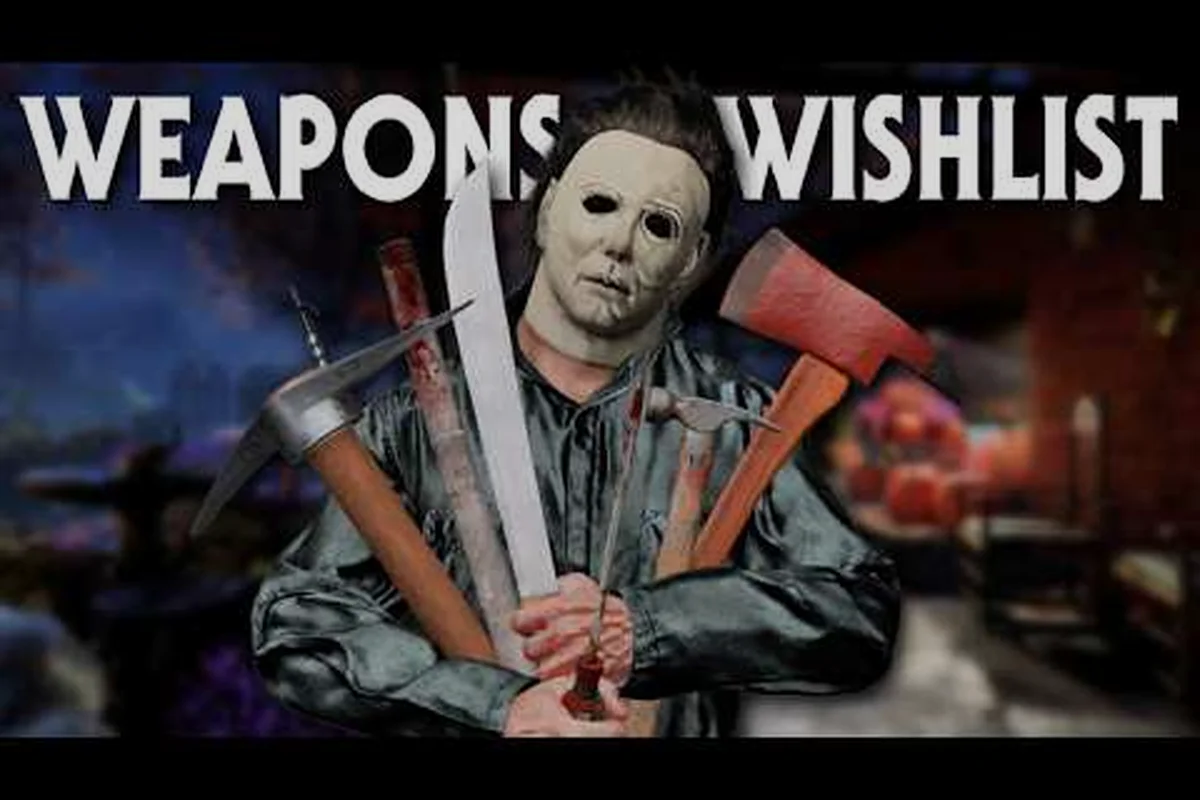
Surviving a night in Haddonfield means knowing exactly what you can grab when Michael Myers closes in. Halloween: The Game weapons you can find are rarely powerful enough to kill him, but they can buy you precious seconds to escape, break a window, or set up a teammate for a rescue. This guide breaks down every item category, how durability works, and which tools actually deserve a spot in your loadout rotation. If you want to compare how those tools measure up against dedicated offensive options like the bat or knife, our breakdown of Halloween The Game Weapons covers their damage, reach, and swing speed in the same survival context.
What Weapons You Can Find Across Haddonfield
The core loop of Halloween: The Game revolves around scavenging. According to the official Steam store page, heroes arm themselves with everyday household items and lethal weapons scattered across Haddonfield, which means you will spend a significant portion of each match checking kitchens, garages, and sheds rather than hiding in one spot. The spawn philosophy here is deliberately asymmetrical: Michael Myers is an unkillable threat, so every weapon you find serves a utility purpose rather than a damage-per-second purpose.
Understanding the distinction between improvised tools and dedicated melee weapons is critical because it affects your decision-making under pressure. A frying pan might knock Michael back for half a second, while a baseball bat can stun him long enough for a teammate to complete a window escape. The following table organizes the most commonly reported weapon categories based on community testing and official gameplay footage:
| Weapon Category | Common Spawn Locations | Primary Function | Typical Durability Range |
|---|---|---|---|
| Kitchen Knife | Kitchen counters, drawers | Quick slash, low stun | 2–3 hits |
| Baseball Bat | Garages, sheds, closets | Medium stun, knockback | 4–6 hits |
| Hammer | Workbenches, basements | Armor-breaking utility | 3–5 hits |
| Crowbar | Utility rooms, police cars | High stun, slow swing | 5–7 hits |
| Axe | Fire stations, woodpiles | Heavy damage, slow | 3–4 hits |
| Pickaxe | Construction sites, mines | Drag execution tool | 2–3 hits |
The Axe Throw Power Cut clip from IllFonic's official YouTube channel confirms that axes are not just melee tools—they can be thrown as projectiles with unique animation states. This adds a layer of depth to Halloween: The Game weapon combos, since a thrown axe that connects can interrupt Michael's grab animation and create a larger opening than a standard swing.
How Rarity Shapes Weapon Spawns
Not every weapon you find in Halloween: The Game is created equal, and rarity plays a significant role in determining both spawn frequency and baseline effectiveness. Community reports from the official Discord suggest that common items like kitchen knives and hammers appear in nearly every match, while rare tools such as the pickaxe or axe are locked behind specific map zones and sometimes require a noise-generating action to access.
When you combine rarity with the durability system, a clear meta emerges: high-rarity weapons are not necessarily the best melee weapon in every situation, because their limited durability means they break after only a few successful stuns. A crowbar with 5–7 durability hits may actually outperform an axe with 3–4 durability hits if you need sustained pressure across multiple chase sequences, which is why experienced players often prioritize consistency over burst potential.
Kitchen Items and Improvised Tools: The Underrated Arsenal
One of the most misunderstood aspects of Halloween: The Game is the value of kitchen items as defensive tools. Because the game's official description emphasizes "everyday household items," many players assume these are filler picks with no real tactical value. That assumption gets people killed. A frying pan, a rolling pin, or even a cast-iron skillet can interrupt Michael's grab animation, which is often the difference between a teammate getting executed and a teammate scrambling through a broken window.
The reason kitchen items deserve respect comes down to accessibility and surprise factor. While a baseball bat might be locked in a garage with a noisy door, kitchen drawers are usually silent to open and present in nearly every house on the map. This means you can rotate through multiple kitchen items during a single chase, chaining short stuns that extend your survival time without committing to a single high-value weapon.
The table below compares the most frequently reported kitchen items based on community testing, with a focus on practical utility rather than raw damage:
| Kitchen Item | Stun Duration | Noise Level on Use | Best Use Case |
|---|---|---|---|
| Frying Pan | 0.6–0.8 sec | Low | Interrupting grabs |
| Rolling Pin | 0.5–0.7 sec | Low | Quick escape hits |
| Cast-Iron Skillet | 0.8–1.0 sec | Medium | Holding doorways |
| Butcher Knife | 0.4–0.5 sec | Very Low | Silent chip damage |
| Wine Bottle | 0.3–0.4 sec | High (shatter) | Distraction tool |
The Fridge Execution shown in official footage also hints that certain kitchen appliances themselves can become environmental weapons, although the exact trigger conditions remain unclear as of the current build. What matters for your loadout strategy is that you should never dismiss a kitchen item just because it lacks the visual weight of an axe or crowbar.
Weapon Durability: What Breaks First
Halloween: The Game weapon durability is not a hidden stat—it is the single most important factor in determining whether you survive an extended chase. Every melee weapon has a finite number of uses before it breaks, and once broken, it cannot be repaired mid-match. This creates a natural tension: do you burn your baseball bat's durability on a risky stun attempt, or save it for a guaranteed escape window?
Community data suggests that lighter weapons like kitchen knives and wine bottles break after 2–3 successful connections, while heavier tools like crowbars and sledgehammers can withstand 5–7 hits. The tradeoff is swing speed: heavier weapons have longer wind-up animations, which means Michael can close the distance if you mistime your attack. The official Pickaxe Drag motion capture video from IllFonic demonstrates just how slow some of these heavy tools are, with a drag animation that leaves you vulnerable if you miss.
Understanding weapon durability also means understanding durability decay on missed swings. Based on player reports, a whiffed swing still consumes durability, which punishes panic attacks and rewards players who bait Michael into a predictable path before committing to a hit. This is why the best melee weapon for beginners is often the crowbar—its generous durability window forgives mistakes that would shatter a knife instantly.
Best Melee Weapons for Survivors
Choosing the best melee weapon in Halloween: The Game depends on your role in the team and your personal comfort with timing-based combat. There is no single "correct" answer, but the community has largely settled on a tiered ranking based on durability, stun duration, and accessibility. The following table reflects aggregated player feedback from Discord discussions and gameplay footage analysis:
| Weapon | Durability | Stun Duration | Swing Speed | Overall Tier |
|---|---|---|---|---|
| Crowbar | 5–7 hits | 0.9–1.2 sec | Slow | S-Tier |
| Baseball Bat | 4–6 hits | 0.8–1.0 sec | Medium | A-Tier |
| Axe | 3–4 hits | 1.2–1.5 sec | Very Slow | A-Tier |
| Hammer | 3–5 hits | 0.5–0.7 sec | Fast | B-Tier |
| Kitchen Knife | 2–3 hits | 0.3–0.4 sec | Very Fast | C-Tier |
| Frying Pan | 2–3 hits | 0.6–0.8 sec | Fast | B-Tier |
The crowbar earns its S-tier status because it balances durability, stun duration, and availability in a way no other weapon matches. You can find it in utility rooms, near police cars, and sometimes in basements, which means you rarely have to gamble on a high-rarity spawn. The baseball bat is the runner-up because it swings faster than a crowbar while still offering enough durability to survive multiple chase sequences.
Weapon Upgrades and Perks
One question that comes up constantly in the community is whether Halloween: The Game weapon upgrades exist in the current build. As of August 2026, the answer is nuanced: there is no traditional crafting or upgrade bench, but certain perks and loadout modifiers can extend weapon effectiveness in specific ways. Community reports indicate that some survivor perks reduce durability consumption on successful stuns, while others increase the stun duration of kitchen items specifically.
Because official documentation on perks is still limited, the most reliable approach is to check the official Halloween: The Game website and the Steam store page for patch notes and developer updates. The IllFonic team has been transparent about their roadmap, and the official YouTube channel regularly posts short clips that reveal new mechanics before they appear in patch notes. Until a full upgrade system ships, treat weapon durability management as your primary form of "upgrading"—learning which items to save and which to burn is a skill that directly translates to survival.
Weapon Tips and Combos for Surviving Michael
Mastering Halloween: The Game weapon tips means moving beyond the mindset of "hit Michael and run." The game's asymmetrical design rewards coordinated weapon use, where one survivor's stun creates an opening for another survivor's objective play. The most effective weapon combos involve chaining stuns from different weapon types, because Michael's recovery animation resets differently depending on the stun source.
A practical combo that has gained traction in community guides is the pan-into-bat sequence: one survivor lands a fast frying pan hit to interrupt Michael's grab, then immediately switches to a baseball bat for the longer stun while a second survivor completes a window escape. Because the frying pan swing is fast and quiet, it catches Michael mid-animation, and the follow-up bat hit extends the total stun window by roughly 1.5 seconds.
The following step list outlines a reliable weapon rotation strategy for solo players facing a prolonged chase:
-
Step 1: Start with a kitchen knife to chip at Michael's approach path without committing to a heavy weapon's slow swing.
-
Step 2: Switch to a frying pan when Michael closes within grab range, because the fast swing interrupts his grab animation more reliably than a slower tool.
-
Step 3: Break line of sight after the pan stun and rotate to a new room, since staying in the same area invites a predictable re-engage.
-
Step 4: Save your crowbar or baseball bat for a guaranteed escape window, not for panic swings that burn durability on whiffs.
-
Step 5: Communicate your weapon state to teammates using the ping system, since a broken weapon in your hands is useless for a coordinated rescue.
The Axe Throw Power Cut clip demonstrates another layer of combo potential: a thrown axe can stagger Michael from a distance, which opens a window for a teammate to land a melee hit without risking a grab. This ranged-to-melee transition is risky because it consumes the axe entirely, but the payoff is one of the longest stun chains available in the current build.
Using Weapons to Equip NPC Townsfolk
One feature that separates Halloween: The Game from other asymmetrical horror titles is the ability to equip NPC townsfolk with weapons to create distractions and escape windows. According to the official Steam description, heroes can arm NPCs to draw Michael's attention away from the main objective, which adds a strategic layer beyond direct combat. The exact mechanics vary by map, but the core idea is consistent: a distracted Michael is a vulnerable Michael.
This system means that weapons you can find have value even if you never swing them yourself. Handing a hammer to an NPC in a high-traffic area can pull Michael across the map, giving your team time to complete objectives. The tradeoff is that NPCs have limited durability usage and will break weapons faster than a player character, so you need to decide whether the distraction is worth the resource cost.
Frequently Asked Questions
What is the best melee weapon for beginners in Halloween: The Game?
The crowbar is the best beginner melee weapon because its 5–7 durability hits forgive mistimed swings that would instantly break a kitchen knife. It also stuns Michael for roughly one second, which gives new players a clear window to break line of sight and rotate to a safer room.
Do kitchen items actually work against Michael?
Yes, kitchen items like frying pans and rolling pins can interrupt Michael's grab animation, which is often the difference between a teammate escaping and getting executed. Their low durability means they break after 2–3 hits, but their fast swing speed and silent pickup make them excellent emergency tools.
How does weapon durability work?
Every weapon has a finite number of successful connections before it breaks, and missed swings also consume durability based on community testing. Lighter items break after 2–3 hits, while heavier tools like crowbars and sledgehammers last 5–7 hits, which is why durability management matters more than raw damage.
Can I upgrade weapons in Halloween: The Game?
There is no traditional upgrade bench in the current build, but certain survivor perks may reduce durability consumption or extend stun duration on specific weapon types. Check the official Steam page and IllFonic's YouTube channel for patch notes, since the developer has been actively revealing new mechanics through short clips.
What are the best weapon combos against Michael?
The pan-into-bat sequence is a reliable combo: land a fast frying pan hit to interrupt Michael's grab, then switch to a baseball bat for a longer stun while a teammate escapes. Another strong option is throwing an axe from range to stagger Michael, then following up with a melee hit from a second survivor.
Understanding the full landscape of Halloween: The Game weapons you can find is not about memorizing a tier list—it is about building a mental map of spawn locations, durability windows, and combo opportunities. The best survivors treat every kitchen drawer and garage shelf as a potential escape route, not just a loot source. When you internalize how durability decays, which items stun longest, and how to chain weapon types with teammates, you transform from a victim into a strategist who can extend every chase by seconds that matter.