
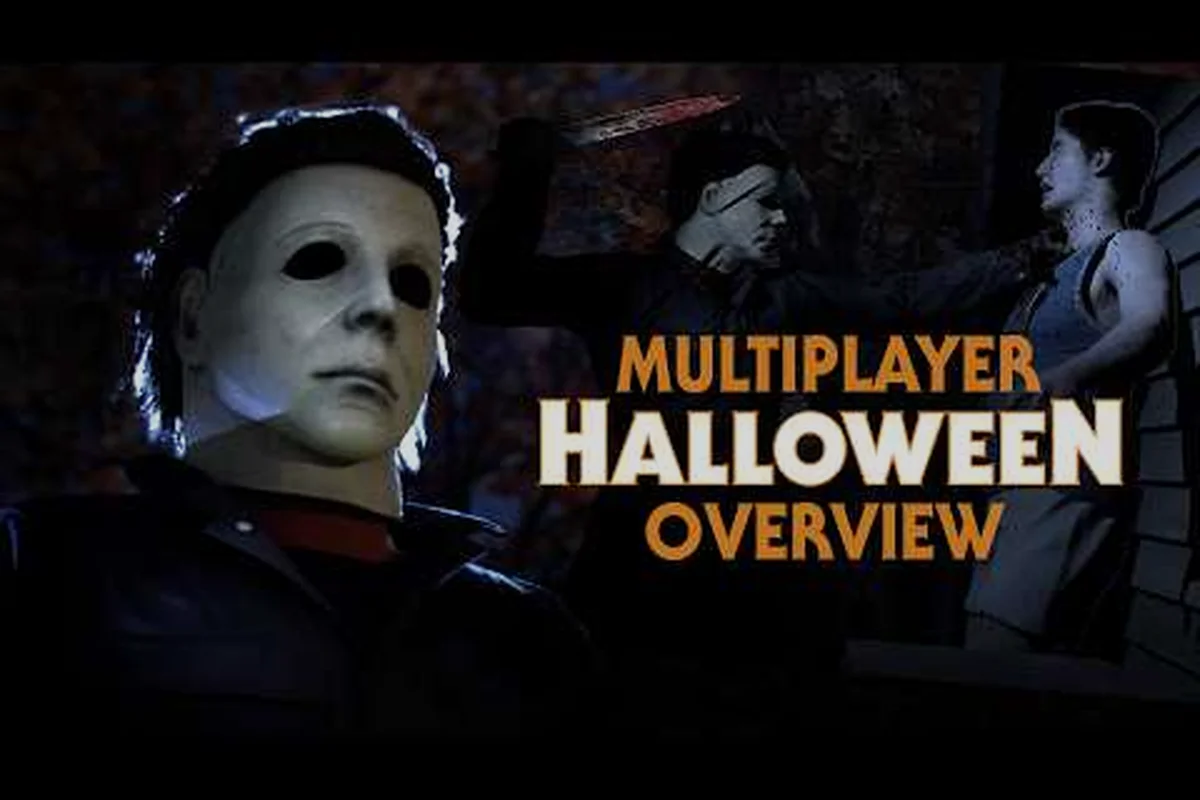
Halloween: The Game multiplayer redefines asymmetric horror by pitting one relentless Michael Myers against up to four Heroes in a living Haddonfield sandbox. This 1v4 structure creates tension that pure co-op or pure PvP modes cannot match, because every match balances coordinated survival against a single, methodical predator. Understanding the online flow determines whether you escape the night or become another body on Elm Street. Understanding the online flow determines whether you escape the night or become another body on Elm Street, and once you’ve internalized that predator-versus-survivor rhythm, you can sharpen your competitive instincts further with our Halloween The Game Ranked Guide to see how those same mechanics translate into ladder play.
How the 1v4 Asymmetric Multiplayer Works
The core of Halloween: The Game multiplayer is a 1v4 format where one player controls Michael Myers while up to four other players take on Hero roles across Haddonfield. Unlike symmetrical shooters, each side operates with completely different objectives, movement capabilities, and win conditions. Heroes must coordinate to alert police, equip NPCs, and rescue families before Michael eliminates them all. Meanwhile, the Michael player stalks from the shadows, choosing when to strike so that the group never feels safe.
The asymmetry extends beyond simple health pools. Heroes rely on environmental awareness, item sharing, and quick communication to survive, while Michael benefits from map knowledge and patience. According to the official Steam page, the game supports Multi-player, Online PvP, Co-op, and Online Co-op, which means the 1v4 framework is baked into every online session rather than being an optional side mode. A single match can swing dramatically based on whether the Hero team spreads out or sticks together.
This structure creates natural replayability because no two matches play out identically. Michael might focus on isolating a lone Hero early, forcing the remaining three to abandon objectives for rescue attempts. Alternatively, a coordinated four-player team can complete objectives quickly, applying pressure that forces Michael into aggressive, riskier plays. Community reports consistently describe matches that end in under ten minutes when one side misplays the opening phase.
| Role | Players | Primary Objective | Key Strength | Core Weakness |
|---|---|---|---|---|
| Michael Myers | 1 | Eliminate all Heroes | Stealth, patience, map control | Vulnerable when overcommitting |
| Hero | 1-4 | Alert police, equip NPCs, rescue families | Numbers, item sharing, objectives | Isolated targets fall quickly |
The 1v4 design also means matchmaking and lobby composition matter significantly. A full lobby with four Heroes creates the intended balance, but the game must still function when fewer Hero slots are filled. Players have reported that lobbies can launch with fewer than four Heroes, which shifts the difficulty and pacing for both sides. Understanding how to play multiplayer in Halloween: The Game therefore starts with knowing what your role demands in any given lobby size.
Hero Team Coordination in Online Co-op
Hero success in Halloween: The Game multiplayer depends almost entirely on coordination, which is why the online co-op element functions as the backbone of the survivor experience. Four Heroes who communicate effectively can complete objectives faster than Michael can respond, while four Heroes who split up without a plan become easy targets. The game provides multiple objectives—alerting police, equipping NPCs, and rescuing families—and prioritizing them correctly requires constant situational awareness.
One of the most important coordination tools is the buddy system. Traveling in pairs means Michael cannot secure a quick elimination without exposing himself to counterplay. While two Heroes work on alerting police, another pair might focus on equipping NPCs so that the map becomes progressively more dangerous for Michael. This parallel objective progression forces the killer to choose which group to pressure, giving the other pair breathing room to complete their task.
Voice communication dramatically improves Hero performance, especially when callouts include specific map locations and Michael's last known position. Players using text chat or no communication at all often struggle because Michael can reposition quickly and silently. A simple callout like "Michael near the hardware store, moving east" allows the entire team to adjust their rotations without abandoning objectives. The difference between a coordinated four-player team and four solo players is often the difference between a clean escape and a team wipe.
| Coordination Element | Solo Play | Coordinated Team |
|---|---|---|
| Objective completion | Slow, easily interrupted | Fast, parallel progress |
| Survivability | Low, isolated kills | High, mutual support |
| Michael pressure | Minimal | Constant, forces mistakes |
| Information sharing | None | Real-time callouts |
| Match consistency | Highly variable | Predictable win conditions |
Heroes should also understand that running is sometimes the correct answer. Michael Myers wins by isolating and eliminating targets, so disengaging from a losing fight preserves the team's objective progress. If two Heroes are down and Michael is camping their bodies, the remaining two players are often better served completing an objective rather than attempting a risky double rescue. This strategic retreat mentality separates effective Hero teams from those that feed Michael easy eliminations.
Michael Myers Strategy in the 1v4 Sandbox
Playing Michael Myers in Halloween: The Game multiplayer requires a fundamentally different mindset from the Hero experience. You are outnumbered, but you hold the initiative because Heroes must react to your positioning. The most successful Michael players treat every match as a hunt where patience compounds into kills. Rushing the first Hero you see often backfires because the other three players will complete objectives while you are locked into a chase.
Stalking is Michael's primary tool. Before committing to an attack, you should observe the Hero team's rotation patterns, identify who is isolated, and plan an escape route after the strike. Because Heroes can alert police and equip NPCs, every second you spend chasing a target means the map becomes more hostile. Michael's advantage is that Heroes do not know exactly where you are, so you can wait for a mistake rather than forcing an engagement.
Target priority matters enormously. Eliminating the Hero who is coordinating the team or carrying key items can cripple the survivors' objective progress. Alternatively, focusing on the weakest link—often a new player or someone separated from the group—generates early pressure that forces the remaining Heroes to abandon their plan. Community players frequently describe Michael as a "pressure character" because every kill creates cascading disadvantages for the Hero team.
| Michael Tactic | When to Use | Risk Level | Expected Outcome |
|---|---|---|---|
| Early ambush | First 60 seconds | Medium | One elimination, reveals position |
| Objective camping | Mid-game | High | Blocks progress, invites group push |
| Hit-and-run | Anytime | Low | Wounds Heroes, preserves stealth |
| Endgame stalking | Final phase | Medium | Forces desperate Hero plays |
| Body camping | After a kill | High | Secures elimination, wastes time |
Patience is the hardest skill to develop as Michael because the urge to chase is powerful. However, the best Michael players understand that Heroes must eventually commit to objectives, and those commitments create openings. When a Hero team splits up to handle multiple objectives, you choose which group to punish. This decision-making under incomplete information defines the skill ceiling of Halloween: The Game multiplayer for the killer role.
Online Multiplayer Setup and Lobby Basics
Getting into a Halloween: The Game multiplayer match requires navigating the lobby system, which players have described as straightforward but with some quirks. The game supports online co-op and PvP through Steam's multiplayer infrastructure, meaning you need a stable internet connection and a Steam account to access the full experience. While the official website confirms 1v4 as the core format, lobby composition can vary depending on how many players are available.
Creating a private lobby allows you to control exactly who joins, which is ideal for practicing Hero coordination or testing Michael strategies with friends. Public lobbies match you with random players, which introduces variability in skill level and communication quality. The lobby guide for Halloween: The Game covers the invite and crossplay specifics in detail, but the fundamental choice is whether you want a controlled environment or the unpredictable matchmaking pool.
One common frustration reported by players is the wait time when filling a 1v4 lobby. Because only one Michael slot exists, most players queue as Heroes, which can create bottlenecks. Some players mitigate this by queuing with a full four-player group, which guarantees a match once a Michael player is found. Understanding how to play multiplayer in Halloween: The Game includes managing these lobby dynamics so you spend more time playing and less time waiting.
| Lobby Type | Player Count | Best For | Communication | Setup Difficulty |
|---|---|---|---|---|
| Public 1v4 | 5 | Random matches | Optional voice | Low |
| Private 1v4 | 2-5 | Practice, friends | Encouraged | Medium |
| Partial Hero | 2-4 | Quick sessions | Text or ping | Low |
| Full Hero Stack | 4+Michael | Coordinated play | Mandatory voice | High |
The Steam store page confirms that Halloween: The Game includes Online PvP and Online Co-op support, which means the multiplayer framework is fully integrated rather than bolted on. This integration matters because it affects matchmaking stability, reconnect behavior, and how the game handles dropped players. Community reports suggest that matches can continue if a Hero disconnects, though the balance shifts noticeably in Michael's favor when the Hero count drops.
Map Knowledge and Objective Rotations
Map knowledge is the single biggest skill multiplier in Halloween: The Game multiplayer, because every objective, escape route, and ambush spot ties directly to the layout of Haddonfield. Heroes who know where police stations, NPC spawn points, and family rescue locations appear can plan efficient rotations that minimize exposure. Michael players who master sightlines and flanking paths can intercept those rotations before objectives complete.
The objective structure creates natural chokepoints that both sides must respect. Alerting police likely requires Heroes to reach a specific building and interact with a terminal, which means Michael can predict where the team will converge. Equipping NPCs may involve visiting multiple locations across the map, forcing Heroes to spread out and creating isolation opportunities. Rescuing families probably requires escorting or defending targets, which locks Heroes into vulnerable positions.
Understanding these objective mechanics allows Michael to set up ambushes rather than wandering aimlessly. If you know the police alert objective takes 20 seconds to complete, you can position yourself to interrupt at the 15-second mark, when Heroes are most committed. This level of map and objective knowledge separates effective killers from those who rely on random encounters. The official Halloween: The Game website describes the sandbox as elevated 1v4 asymmetrical multiplayer, and that elevation comes from how objectives interact with map geometry.
| Objective | Likely Location Type | Hero Risk | Michael Opportunity |
|---|---|---|---|
| Alert police | Central building | High exposure | Camp the terminal |
| Equip NPCs | Multiple scattered spots | Isolation risk | Pick off lone Heroes |
| Rescue families | Residential areas | Escort vulnerability | Ambush during escort |
| Escape/win | Map exits | Final stand | Block exits |
Heroes should rotate between objectives as a group whenever possible, but some objectives may require splitting up. When splitting is necessary, the team should designate a rally point and a fallback plan. This is where the 4 player guide aspect becomes critical—a team that practices rotations together will instinctively know where to regroup when Michael applies pressure. The difference between a practiced four-player team and a pickup group is most visible during mid-game objective transitions.
Advanced Multiplayer Tactics for Both Sides
Beyond the fundamentals, Halloween: The Game multiplayer rewards players who develop advanced tactics specific to the 1v4 format. For Heroes, this means mastering bait-and-punish strategies where one player acts as bait while the other three set up an ambush. Michael players who fall for this trap can lose their momentum entirely, especially if the Heroes chain multiple stuns or distractions. Because Michael has no teammates to bail him out, a single successful Hero counterplay can swing the match.
Resource management is another advanced layer. Heroes can share items, which means the team should designate who carries healing, who carries tools, and who carries objective-critical equipment. A Hero team that distributes resources intelligently can survive multiple Michael encounters, while a team that hoards items collapses after the first elimination. Community data consistently shows that teams with designated roles outperform teams where everyone plays independently.
Michael's advanced play revolves around psychological pressure. Instead of always going for kills, you can wound multiple Heroes, force them to burn healing items, and then disappear. This attrition strategy drains Hero resources and creates a sense of dread that leads to mistakes. When Heroes are afraid to split up, they complete objectives slower, which gives Michael more time to set up decisive strikes. The mental game is as important as mechanical skill in asymmetric horror.
| Advanced Tactic | Side | Execution | Counter |
|---|---|---|---|
| Bait and punish | Hero | One Hero lures, three ambush | Michael disengages early |
| Resource attrition | Michael | Wound multiple Heroes, retreat | Heroes share healing |
| Objective pressure | Hero | Rush one objective as a unit | Michael camps key objective |
| Silence play | Michael | No attacks, let paranoia build | Heroes speed up rotations |
| Split rescue | Hero | Two rescue, two cover | Michael targets rescuers |
The online guide component of Halloween: The Game multiplayer extends into match analysis. After each game, both sides should review what worked and what failed. Did Michael camp objectives too early and lose map control? Did Heroes split up when they should have stayed together? These post-match reflections compound into faster improvement, especially for players who want to climb beyond casual play. The ranked and party aspects of competitive multiplayer build on these foundations, but the core lessons apply to every match.
Frequently Asked Questions
How many players can play Halloween: The Game multiplayer?
Halloween: The Game multiplayer supports up to five players in a 1v4 format: one Michael Myers versus up to four Heroes. The Steam page confirms Online PvP, Co-op, and Online Co-op support, meaning online sessions are fully integrated rather than optional. Lobbies can launch with fewer than four Heroes, which shifts balance.
Is Halloween: The Game multiplayer online only?
Yes, the multiplayer component is online-focused through Steam's infrastructure. The official website describes the experience as online co-op and PvP, so you need an internet connection and a Steam account. There is no local split-screen mode mentioned in official sources. Community reports indicate private lobbies allow controlled sessions with friends.
How do I play with friends in Halloween: The Game?
Create a private lobby and invite friends through Steam, then coordinate roles before the match starts. A full four-player Hero stack guarantees you control team composition and communication quality. The lobby system allows you to choose between public matchmaking and private sessions, which is ideal for practicing strategies without random players.
What is the best strategy for Heroes in 1v4 mode?
Heroes should travel in pairs, complete objectives in parallel, and communicate Michael's position constantly. Designate resource carriers and avoid solo wandering because isolated Heroes fall quickly. When Michael camps a downed teammate, complete other objectives instead of forcing a risky rescue. Coordinated four-player teams consistently outperform solo players.
Can one player win as Michael Myers against four Heroes?
Yes, Michael can win against a full four-player Hero team, but it requires patience and target priority. Successful Michael players stalk, wait for isolation, and use hit-and-run tactics rather than chasing aggressively. Every elimination creates cascading pressure that forces Heroes to abandon objectives. Community players describe Michael as a momentum-based character who snowballs when played correctly.
Mastering Halloween: The Game multiplayer means understanding both sides of the 1v4 equation—the coordinated Hero team that completes objectives under pressure and the patient Michael who exploits every mistake. The online co-op framework rewards communication, map knowledge, and role-specific decision-making that no single-player horror experience can replicate. Whether you queue as a Hero with three friends or stalk Haddonfield alone, every match tests your ability to adapt, communicate, and execute under asymmetric conditions.